Arctic Tern
The world's distance record-holder - a Pole-to-Pole migrant!
What you need to know about the Arctic Tern
Our Expert Says… Arctic Tern chicks are very precocious. Within just a couple of days of hatching, they are already able to move about and often leave the nest for a wander! This can make the adults concerned and more likely to attack any nearby visitors."
The Arctic tern is remarkable for its migration. It breeds in the Arctic summer, then flies to the Antarctic for the southern summer. Its reward for this 12,000 miles-plus journey is that the Arctic tern enjoys two per year summers, and is said to experience more daylight than any other creature on the planet!
What is even more remarkable is that the newly-fledged chicks make this migratory journey, too. One impressive example was an unfledged chick that was ringed in the northern UK in June 1982 being found in Australia in October - a journey of 14,000 miles just 3 months after fledging.
Modern tracking surveys have shown that this is not unusual and that many Arctic terns will cover 40-50,000 miles every year. It is very rare to spot an Arctic tern outside of the breeding season as their migration routes are far offshore.
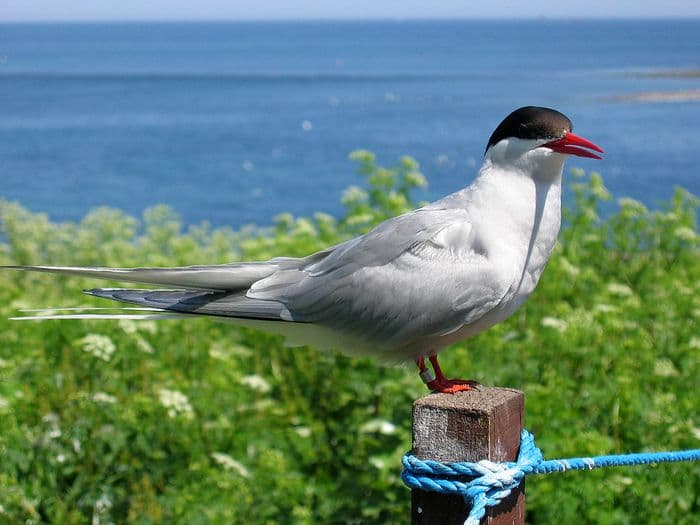
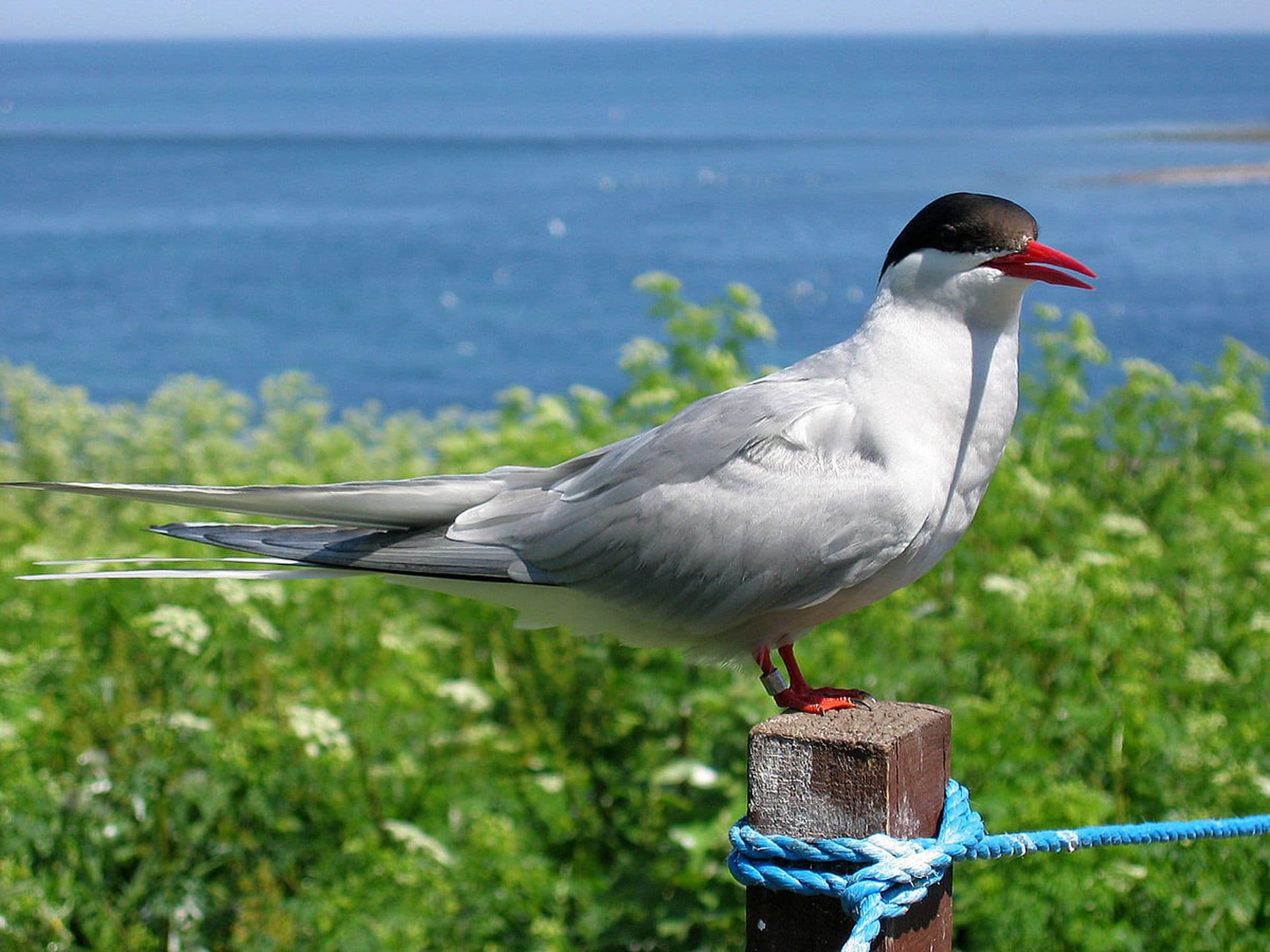
A medium-sized bird, the Arctic tern has a distinctive dark red beak, legs, and feet. Like other terns, it has a deeply forked tail. The head has a black cap with grey nape and the birds have grey upperparts with the rest of the body being mainly white with some grey.
Arctic terns nest in large colonies and lay their eggs in small depressions in the ground. They are protective of the eggs and chicks and very aggressive, even attacking humans who stray too close. Although not able to do too much damage, they can certainly give your head a painful cut and they are bold enough to often be successful at deterring foxes, cats, predatory birds, and even polar bears.
Arctic Terns wintering in Antarctica and the Southern Ocean will have black bills and a white forehead to the black crown.
Interesting facts about Arctic Tern
It is calculated an Arctic Tern may do an average 'round trip' of 70,900km/44,100 miles each year. They can live to 30 years or more, meaning some older birds may fly over 2,100,000km/1,300,000 miles in their life time, that is around 3 times to the moon and back!
Pictures of Arctic Tern