South Georgia Shag
Antarctica's only cormorant that toughs out the coldest winters
What you need to know about the South Georgia Shag
Our Expert Says… "The name 'blue-eyed shag' covers a range of species, including Antarctic shag, the imperial or king shag, and South Georgia Shag. Further confusion is caused by some of these being different names for the same thing! There are even debates about whether it should be called a shag, or a cormorant!
The South Georgia Shag is endemic to the South Georgia region, but is very similar to other species of Blue-eyed Shag. To the west of the main island of South Georgia Island some isolated rocks that are superb for seabirds and cetaceans. They are know as Shag Rocks due to the South Georgia Shags that breed there.
The Blue-Eyed shag is a 75cm (30”) tall, 3kg (7lb) black and white seabird. It has a 1.2m (4ft) wingspan but unlike its non-polar cormorant cousins it doesn’t spread out its wings to dry them. This is thanks to its very dense under-plumage that makes a waterproof barrier. This means the Blue-eyed shag doesn’t need to dry itself after fishing and expose its body to the freezing Antarctic temperatures.
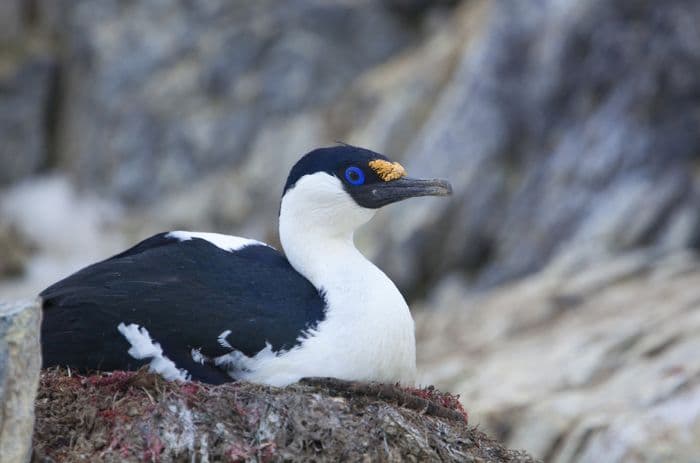
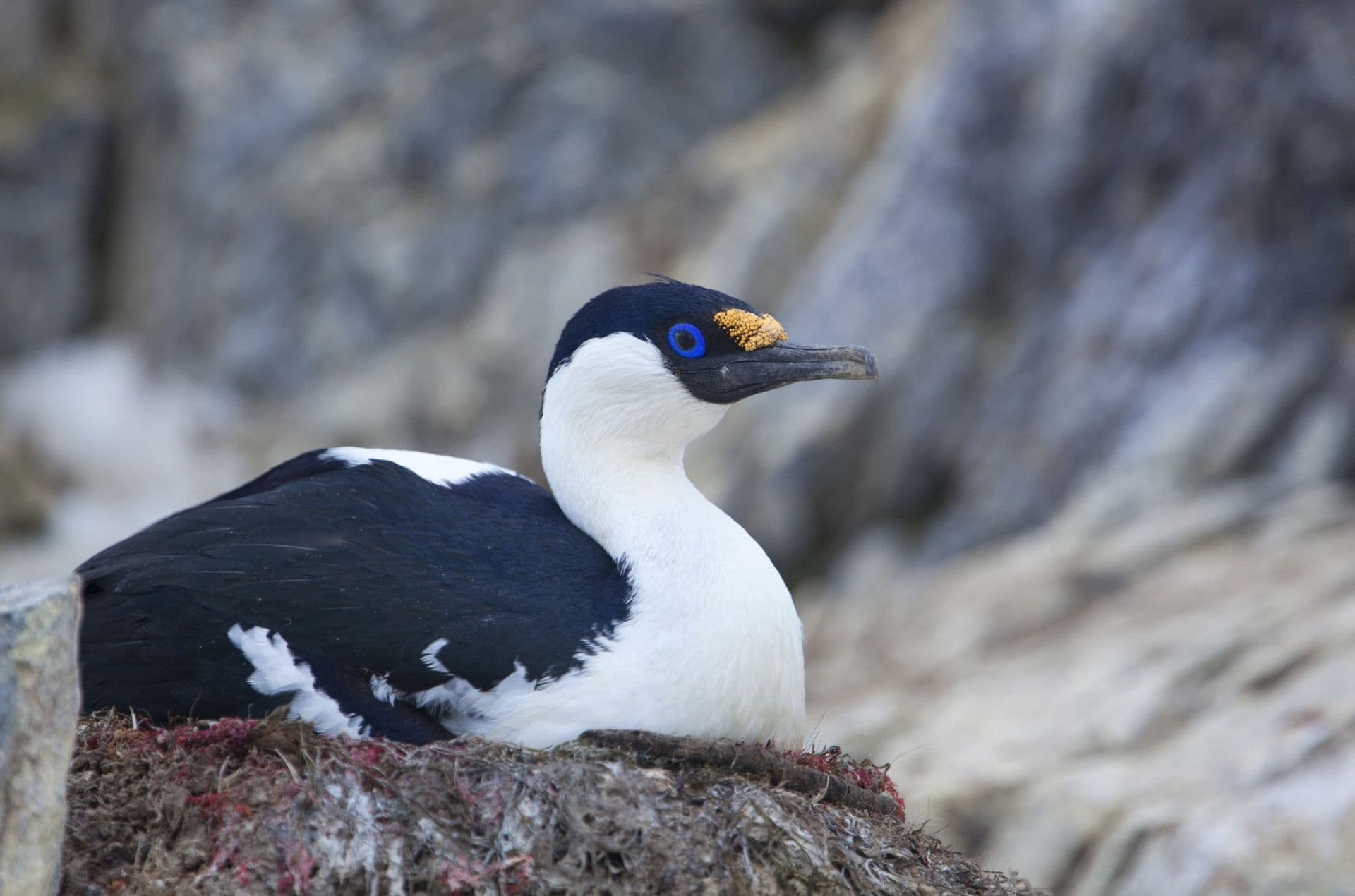
The “blue eye” they are named for isn’t actually their eye at all! It’s actually blue-colored skin that surrounds the eye, and together with the warty, yellow growth above the bill, it forms the two main identifying traits of the species.
Antarctic shags don’t migrate, staying put winter and summer living in colonies. During the breeding season they pair up and both partners help to build the typical cone-shaped nest out of beach debris, seaweed, and feather, stuck together with their own feces. Both parents take it in turn to incubate the eggs, then the male takes on feeding duties while the female keeps the newly-hatched chicks warm until their downy feathers are formed.
Blue-eyed shags are diving birds, and they usually swim down up to 80ft beneath the waves to catch the fish and crustaceans that form the main part of their diet.
Although not thought to be endangered and currently stable, naturalists have estimated that there are only 20,000 individuals in the entire species’ population.
There has been debate and confusion about the Blue-Eyed Shag’s taxonomy, and the different species, and whether it should be the Blue-eyed Cormorant! The name chosen according to the factsheet or field guide you refer to can be confusing! The Patagonian and Falklands 'Blue-eyed Shag' is also known as the Blue-eyed Cormorant, Imperial Cormorant or Shag, and King Shag or King Cormorant!
The latest assumption is that there could be FOUR species of blue-eyed shags with subtle differences in plumage details. The Imperial Shag of Patagonia, the Falklands Shag (often called King Shag and still considered a sub-species of Imperial Shag in many text books), the South Georgia Shag, and the Antarctic Shag.
Interesting facts about South Georgia Shag
Shags and cormorants are pursuit divers, using their large webbed feet for propulsion.
Pairs of Blue-eyed Shags spend a lot of time lot of time grooming each other. They use seaweed to make the nest and usually lay 2 to 3 eggs. Incredibly, especially for the Antarctic 'blue-eyed' shags, the chicks are naked when they hatch!
And when the chicks fed they stick their head right down the throat of the parent bird. For the young dark chicks, it looks like the adult bird is trying to swallow them. When they are about to fledge they can be as big as the parent bird and it looks very uncomfortable as the head of the 'chick' eagerly pushes right down the neck of the adult. In the end the adults have had enough, pecking at the chick and then abandoning the birds, that can be told from the adults by the lack of the blue eye-ring.
At this time you can see also of birds busily flapping to strengthen the wing muscles. Then one or two take the maiden flight, then the rest seem to get the right idea and a whole group take off, often crashing onto the sea or onto rocks. At this time they can be inquisitive, even landing on Zodiacs and kayaks But they are also very prone to predators at this stage, skuas often ganging up to drown isolated birds.
Pictures of South Georgia Shag